5 Important Questions for Building a Strong Business Foundation

BusinessAs I have stated several times, how you get started often has a direct relationship with your level of business success. Putting your best foot forward drastically increases your chances for success over the long-term. I see this all the time working in the Nevada Small Business Development Center. No matter the type of business or organization, I believe there are several key building blocks within a strong foundation. Below is a list of questions I ask each client when they are getting started.

  1. What makes your idea different from everything else out there? And, is it profitable?

There needs to be something that sets you apart from everyone else. This can certainly be small in nature, but it needs to be distinct. Why would I buy your product or service, when I can get the same thing down the street? And, it may be a good idea, but will anyone actually buy it?

Doing your homework and talking to the right people is crucial. There is a fantastic network of Small Business Development Centers around the country and free quality advice is hard to find these days. If there is not an SBDC office to assist you, then let me know through a comment below and I will help you find resources.

  1. Have you started to create a foundation for your business – your mission and values?

I have written about both mission statements and values in other blogs, so click over to learn more about creating each. The important thing to remember is these are key foundational elements that are meant to help you make decisions about how you do business – both the easy ones and the tough ones.

  1. Have you created a business plan and used applicable research to form your conclusions?

A business plan (or organizational plan) is the framework that is built off of the foundation you place with a mission and values. Using a template off of the internet is easy and a great place to learn what needs to be included. Search for examples to compare from within the same industry to get additional ideas – perhaps things you haven’t thought of before.

  1. How many points are listed out on your action item list?

First, have you started an action item list? If you have, it is likely that your list will need to double. I wouldn’t be surprised if each point requires something else to get you to where you want to be. What does this mean for you? You will probably need to do more research and estimate more time in the process of starting up. Never hold yourself back by putting off your launch date, but spending several hours or an entire day getting critical information is not a delay or a waste of time.

  1. Were your financial projects constructed from real-world estimates?

Even if you are creating a non-profit organization, finances must be accounted for. In business, finances are what make the difference between profitability and closing the doors. The projections created for the business plan must be based on relevant and timely information. If you haven’t had experience with finances or accounting, it is very important someone with that experience is helping you out.

•           •          •

This list is not everything that must be done, but it is where I think that everyone should start. They are all basic items I believe must be accomplished and separate the line between success and failure.

Once you have completed these initial steps, there are even more items that must be considered. The Small Business Administration has a helpful list. Now don’t put it off any longer. Follow me on Twitter to get helpful insights from others in the industry on finding and continuing success.

Image by author

Leadership – Lessons from Nevada Head Football Coach Brian Polian

Last week I had the privilege of attending a lecture on polianleadership by Nevada Head Football Coach Brian Polian. Becoming the 8th youngest FCS head coach in the nation at age 38, Coach Polian has a unique view on being a leader. Growing up under the watch of NFL Hall of Fame Contributor, Bill Polian, Brian has gained many valuable insights that have led to his own style of leadership. While I found many connections to what Coach Polian does on the field and what I have learned in the business world, there were several key quotes I felt really stood out.

  1. “Effort is the price of admission” – Bill Polian. This quote from Coach Polian’s dad sums up my opinion of what every sports movie captures. However, I don’t believe there is an industry in the world where this is not the case. Long-term success is built off of effort.
  1. “Youth is no longer a reason you can’t lead. It is about your ability and production.” And, “don’t worry about your age in an interview. You are there, so they know who you are and saw your skills and potential.” This stood out to me for two reasons. The first is because I have seen this in my own career. The second is because I just wrote a blog about leading as a young professional.
  1. “When you think you have arrived, there are always moments that will take you back a step.” Coach Polian shared a great story about his first college coaching job and bursting with confidence and cockiness, and then being taken down a few notches. I have certainly been in similar situations and truly believe you must have confidence, but also a healthy dose of humility.
  1. “Bloom where you are planted.” Having worked in a previous job for six years, I feel there is something special about really getting to know one organization and growing within it. There may be jobs where you feel like you have to jump around a lot to advance, but there really is a benefit to sticking around and building something.
  1. “Success demands grit.” Having perseverance is truly one of the most important qualities and another topic I recently discussed.
  1. “To succeed, you constantly have to be trying to grow.” Coach Polian talked about his experience coming up as a coach; taking notes, talking to other coaches, listening and understanding what truly made a great leader. If you aren’t learning and making yourself better, you won’t get very far.
  1. “Success demands courage. Are you ready to have uncomfortable conversations?” Whether it is leading those who are older or having to let someone go, if you are not able to have the uncomfortable conversations, positive change will not happen.
  1. “There is no secret to success. There are no shortcuts. You have to be willing to pay the price.” While there are certainly people who we think violate this assumption, I believe that over the long-term everyone has to work hard to get where they want to be. For some, the hard work just seems easier.
  1. “Be yourself.” I ended up having the only question at the end of the lecture and asked the Coach about the most valuable lesson he learned since starting at Nevada. He said it was needing to remember to be himself. You will end up going farther faster when you aren’t trying to be someone else. You can, and should, always try to be better, but being yourself is extremely important.

All of these quotes follow the idea of finding success as a leader. I will have to write another blog about the rest of his many excellent pieces of advice. What I primarily took away from listening to Coach Polian about leadership and success was that every lesson we have learned remains true – work hard, be dedicated, treat others well and, above all, be yourself. So now that you are pumped up with these inspirational quotes, take one and use it the next time you need a motivational shot in the arm. Image Credit

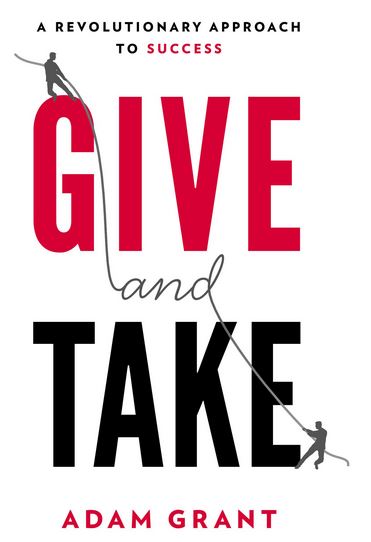
Give and Take – Giving Works!

GATThe idea of people being givers or takers is not a foreign concept to most of us. We think of Mother Teresa as a giver and Kenneth Lay as a taker. However, Mother Teresa’s form of giving is not what being a giver in business means. This was thoroughly laid out in Give and Take by Adam Grant, which I read recently for a management class. Grant’s key point came down to the idea that givers are the most successful people in the business world – and there is a vast amount of scientific evidence to back this up. However, they can also end up at the bottom, so understanding the reasons why are important.

So, what is a giver in business? The same general concept from Mother Teresa applies – someone who gives (time, resources, knowledge, advice, etc.) without any expectation of getting something in return. The important aspect to understand is that successful givers look out for themselves and prevent being taken advantage of; this group of givers is described as being “otherish.”

For me, the most important thing I took away from the book is that givers can be and are the most successful people. There are exceptions to every rule, but the evidence is clear. I would self-identify as a giver and was given an evaluation of 80% giver and 20% matcher through Grant’s evaluation tool. A matcher is someone who will give, but expects something of equal value in return.

The book is filled with evidence and stories of those who have found great success as a giver. There were several other concepts presented that stood out to me, which I have described below.

  • Chunking: By grouping together the time spent helping others, givers are able to focus on their own work more effectively. This could mean volunteering for six hours every other Saturday instead of an hour a day, or scheduling every Tuesday afternoon as the designated time to help others at work.
  • Meyer’s Code: This code comes from George Meyer, an accomplished comedic writer whose work is likely known to 99% of every person in the United States. He laid out four items as the giver’s code of honor. They are simple, but often rare qualities.

Show up • Work hard • Be kind • Take the high road

  • Grit: This simply means having passion and perseverance towards long-term goals. Grit is more important than raw talent when it comes to looking at what can be accomplish.
  • Reciprocity Ring: The idea behind the reciprocity ring is getting a group of people together and having each person ask for something from the group; such as a group of CEO’s or MBA students. People just start helping each other. The examples given in the book range from career advice to process improvements. This very powerful concept boils down to people helping people who otherwise may have not.

Feeling that I am a giver, this book – more than anything else – served as motivation that I am not destined to fulfill the idea that nice guys finish last. Being seen as a giver who takes care of himself at work is a good thing. So, there is no reason to hide that you are a giver – own it and live it.

This really was a great read and I would recommend that you check it out, which you can do by clicking here.

Image Credit

Defining Your Values

Similar to creating a mission statement, defining your values is one of the crucial first steps when beginning a business venture. Why? Because when you face tough decisions, this is what you lean on as a guide. Those decisions are easier to make when you have given yourself permission to make the difficult call. The difference between a mission statement and core values is an important detail; your mission should forge the reason for the business to exist and vales define what you believe in.

Core-ValuesWhen you take the time to set your core values and then define what they mean to the business/organization, you force yourself to evaluate how and why you do business. This means having to look at the suppliers you use, customers you target and product/service you sell. By doing this, you can look at your preferred outcomes and determine if they fall in line with your values. There are several good examples of companies with well-defined core values. In no particular order: Zappos, Southwest and Chevron.

I have listed several steps to help you focus in on the values most important to you. I believe the ideal number of values is between 3 and 7; any less and it won’t cover the full spectrum of your business, and with too many the message can get lost.

  1. What are your personal values? Personal values almost always reflect the business decisions being made. Why set business values you would have a personal problem living up to?
  2. How do you want others to define you? What would you want in a testimonial and what do those words mean to you?
  3. Look at your competition. This is NOT to copy, but to see what drives them. Would you have the same values? If so, what would set you apart from them?
  4. Get the entire team involved. With a small business/company, everyone can get involved. If you have too many people to fit in a room, find a way to let everyone’s voice be heard.
  5. Lock them in and send them out! Once they are set, make an announcement. This doesn’t have to be over the top, but make sure people know what drives you and your business.

Once completed, you are off and running. Values are not a required piece of any business, which is why I feel they are so important – values will set you apart. Defining the values of your business will serve as an essential piece of the foundation that success is built upon. To close, here are a few words from Steve Jobs talking about using values when tough decisions need to be made.

To get you started, please share what you believe your three personal values are in the comment section below.

Related Post: Your Mission – For Business and for Life

Image Credit

Succeeding as a Young Professional

An aspect of my career that I have reflected upon heavily is how I am perceived as a young leader. My work has put me in contact with almost every age demographic; from 18-year-old college freshmen to 90-year-old retired CEOs. Because of this, I have learned a few things about how to put my best foot forward to gain respect for what I am able to accomplish and deliver, as opposed to how old I am.

boy-633014_19202As a young leader you have something to prove, especially when leading individuals who are older. It can be a challenge to win a team over and show them you deserve to be in that position. Below are a few topics to think about as a young leader that I have taken away from my experiences.

  1. What would you want to see? Do a bit of self-reflection and think about what you would want to see in a great leader. Chances are others want to see the same things.
  2. Be Yourself! Don’t try to act differently around those who are older and have been around the block – it will show. Being genuine will go a long way.
  3. Ask for their opinions. As I said above, they have been around the block, so get their advice and make them feel like you value who and what they can contribute. Create a team environment!
  4. Never preach from on high! If you want to make a team, then be a member of that team. I have never seen a dictatorship work well in a work environment, so I don’t believe that is the way to go.
  5. Put in the hours. There is no slacking when it comes to being a leader. When people see you putting in the elbow grease to get a good job done, they will recognize and respect that.
  6. Show your value. Your resume is meaningless to someone who has been in the business for years. So, take your time to review and understand what is going on in the workplace, get the team involved in setting goals and show them the value you bring to the table. Be it fresh ideas or a new way of doing things, let them see why you got the job and get their commitment for positive change.
  7. Find your own style. Write down ideas, make lists, set calendar reminders. Do whatever it takes to keep the things you want to do as a leader in the forefront of your mind.

In addition to things you can do at work to improve your leadership skills at a young age, you can also go out into the community to get more experience. In almost every community in the US, there are opportunities for you to get out and head something up. If not, start one yourself! It could be a community service or philanthropic organization, a book club, alumni association, sports club, networking group, or whatever. Just get out there, join, learn what that organization does and volunteer for a leadership role. The more opportunities you have to lead, the more chances you have to try new things and learn from the experience. And, this can only benefit you in the workplace.

There are so many books on leadership, and everyone I have read is good. Rather than list them all, I will just tell you the last one I read – Give and Take by Adam Grant. This book has a real connection to this topic and it is a great read.

At the end of the day though, you ARE the leader. Someone hired YOU to get the job done. Each situation will be different and part of being a good leader is testing out your style and learning from your successes and failures. You will not find success at every turn, but it is how you learn and move forward that will truly define you as a leader.

Have something else to add? Please leave your thoughts below.

Image Credit

Your Mission – For Business and For Life

ConstructionWhen starting a new business, there are many items that must be worked out, taken care of and secured. To me, one of the most important is defining your mission. Why? Simple – because the mission for your business should be the foundation you build everything upon and for making almost, if not, every decision.

The mission for a business will generally mirror those of the owner(s) because what drives them is what will drive the business. So, with that idea, the concept of defining a mission is a deeply personal endeavor. If you have already gotten your business started, or even been in business for years, the importance of creating a mission is just as high and can make just as much of an impact.

Long or short, the length (almost) doesn’t matter; just the content. As an example, energy company ConocoPhillips has a very short mission statement – Use our pioneering spirit to responsibly deliver energy to the world. This is short and straight to the point. People reading this, and even the company itself, can be reminded about what drives them. The reason I said that length “almost” doesn’t matter is because mission statements can be too long; such as H&R Block’s. The message can be lost if no one wants to read through it.

When looking to write your mission statement, there are a few points you should think about before you get started.

  1. Be honest and write from the heart – The last thing you want is for people to read your mission and not believe it truly represents you or your business.
  2. State your ideal situation – If you want to be the best, world-famous, put your customers first, grow to be the biggest company in your industry, then put that in there. This is as much about what you want to be, as it is how you want to be seen.
  3. Don’t limit yourself – Your mission statement should remain the same throughout the life of your business. Therefore, if you only sell baked goods, but in the future you would like to expand into coffee, then don’t just state you want to be the best baker in the world.

If you need inspiration, I found www.missionstatements.com, which has a multitude of examples for almost every type of mission statement to get the creative juices flowing. Once you have put together your mission, get some feedback from those you trust and then start using it as your guide and post in for the world to see.

Finally, because the mission can be short and covers a broad level of what you do, other items can be created to help clarify who you are and what you are about, such as a vision and values, but I will save my thoughts on those for another time.

As a small push to get started, and if you are feeling brave, please write a one line personal mission statement in the comment section below.

 Image Credit

3 Key Steps for Finding Success

There is no secret recipe for a successful future. Certain elements are usually required to get there; such as hard work, dedication and specific skills. However, there are easy to follow steps to help reduce the risks by taking the time upfront and focusing on what is most important. These steps hold true for all decisions; both personally and professionally.

road3Picking a Path

Starting is by far the most difficult part of any journey. And, that is why the most time should be spent on this stage. When deciding what big change you are going to make or is coming up in life, research and knowing the information that will lead you down the right path is crucial. Test your ideas and make sure you truly believe in your new path.

Plan – For Your Life

While on your journey, there are inevitably going to be hurdles that come up. So, it is important to make sure you have plans and backup options. You can never know exactly what is going to happen, but you can be prepared. What does that mean? It means saving your money, keeping your resume current, networking with as many people as possible, getting additional education or certifications. For business, it means also saving your money, investing in what will be the future of your business, constantly develop new customer relationships, do a SWOT analysis to see what could be your greatest threats and keep customer service as a main priority. You will not be able to know or plan for everything that comes along, but you can put yourself in the best possible position for when it does.

Define Your Success

Finally, you must define your goals and what success means to you. No one can tell you what success looks like. It is a deeply personal belief. Few people look at success in the same way. Someone may only look at success through the lens of fame, money, title or power. Others may simply see it as leaving work with a smile each day or having a customer do so. You must set your own bar for success. This will keep you motivated, push you to meet your own goals and allow you to find true happiness and job satisfaction.

•          •          •

Whether it is in your personal life or the business world, these are three key steps that should always be taken and can make success that much more likely.

Now, I believe there is a fourth step, which is also very important, but comes afterwards. Please leave a comment with what you feel is crucial to future success that happens after decisions are made and outcomes are known.

Image Credit